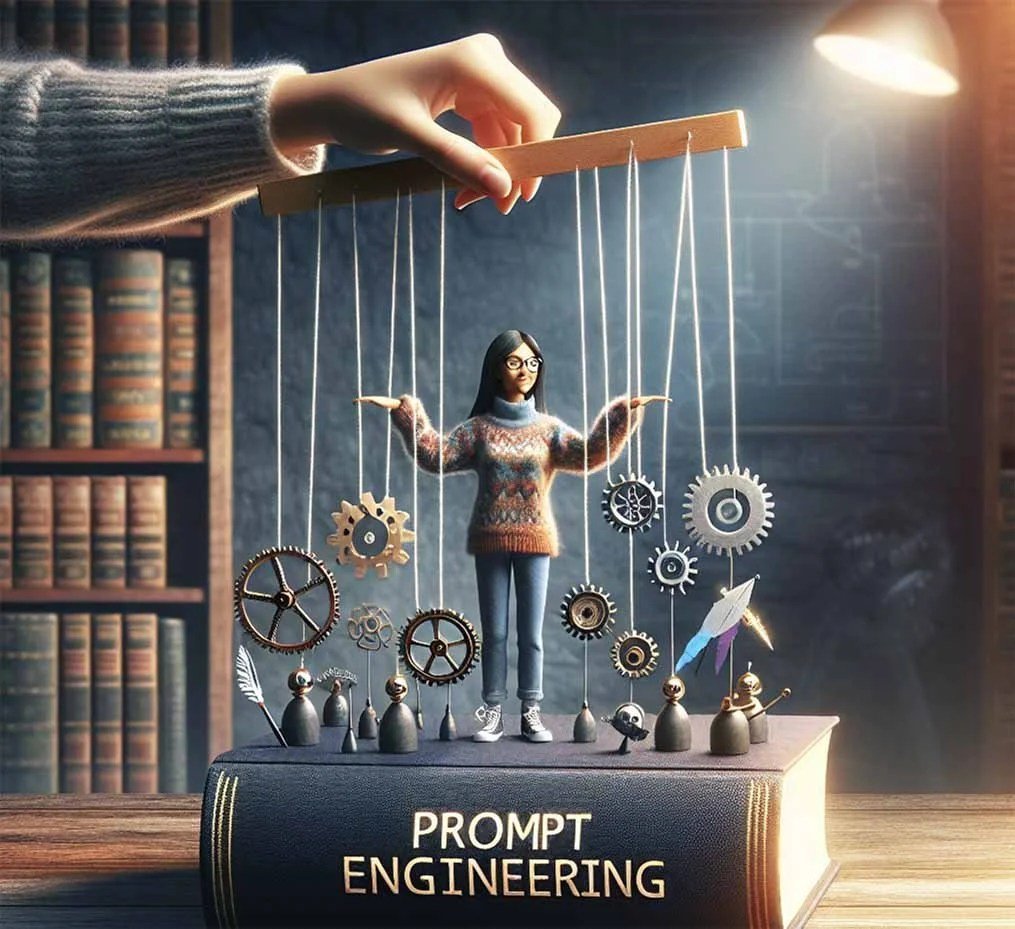
The shimmering fabric of reality, much like a good story, is woven with intention. And when it comes to harnessing the power of artificial intelligence, that intention begins with the prompt. Mastering Prompt Engineering for Stand Names isn't just about getting an AI to spit out a cool moniker; it's about unlocking a unique stratum of AI creativity, guiding these powerful models to conjure beings and abilities as vibrant and imaginative as anything from the pages of a manga.
You're not just a user; you're a sculptor of digital thought, a director of algorithms. With the right prompt, you can transform a vast, amorphous AI into a focused creative partner, ready to help you craft the perfect Stand Name and its accompanying lore. Forget generic fantasy names; we’re aiming for the kind of musical, abstract, or downright bizarre epithets that make a Stand truly unforgettable.
At a glance: Your Prompt Engineering Toolkit for Stand Names
- Prompt engineering is your AI superpower: It's the art of telling AI exactly what you want, transforming vague ideas into precise outputs.
- Components are key: Every great prompt has clear instructions, context, input data, a desired output format, and a specified tone.
- Techniques amplify creativity: From simple one-shot examples to complex chain-of-thought, learn how to guide the AI's reasoning.
- Stand Names are the ultimate creative playground: Apply these techniques to generate names and abilities worthy of the wildest JoJo adventure.
- Best practices prevent AI "misfires": Be clear, provide context, specify format, and iterate to refine your creative vision.
- Avoid common pitfalls: Overly broad prompts or lack of context lead to generic results. Precision is your ally.
The Architect of AI Creativity: What is Prompt Engineering?
At its heart, prompt engineering is the art and science of communicating effectively with large language models (LLMs) like GPT-4 or Claude. Think of it as writing the ultimate set of instructions for a supremely intelligent, incredibly knowledgeable, but also remarkably literal intern. These AI models have ingested an unthinkable amount of text data—the internet, books, scientific papers, fan theories—making them veritable oracles of information and creativity. But without clear guidance, they're just that: oracles.
Your prompt is the key that unlocks their specific expertise. It's the difference between asking "Tell me about cars" and "Generate three conceptual vehicle designs inspired by 1980s synthwave music, each with a unique name and a single paragraph description of its aesthetic and primary function, suitable for a retro-futuristic video game." One gets you a Wikipedia summary; the other gets you Neon Drifter, Chrome Siren, and Pulse Rider.
Why Prompt Engineering is Your Superpower for Stand Names
For fans of JoJo's Bizarre Adventure, a Stand name isn't just a label; it's an extension of character, a hint at power, and often, a clever musical reference. Crafting a truly iconic Stand name, complete with its unique ability and aesthetic, requires a blend of creativity, genre understanding, and thematic consistency. This is where prompt engineering shines.
- Precision: Get names that hit just the right note, be it enigmatic, terrifying, or absurd.
- Efficiency: Generate dozens of unique concepts in minutes, rather than agonizing for hours.
- Control: Steer the AI away from generic tropes towards truly JoJo-esque originality.
- Versatility: Explore different musical genres, thematic inspirations, or power sets for your Stands.
Imagine designing a Stand named "Generate your Stands name" — but not just any name. A name derived from an obscure 70s funk band, with an ability linked to temporal manipulation and a visual design reminiscent of a fragmented disco ball. This level of specificity and creative flair is precisely what prompt engineering allows you to achieve.
Deconstructing the Perfect Prompt: Your Stand Name Blueprint
Before diving into advanced techniques, let's break down the fundamental building blocks of an effective prompt. Each component plays a vital role in guiding the AI toward your desired Stand Name output.
- Instruction: Clearly State the Task
- This is the "what to do." Be direct.
- Generic Example: "Summarize this article."
- Stand Name Example: "Generate five unique Stand names, each based on a musical artist or song."
- Context: Provide Necessary Background Information
- Give the AI the "why" or "from what perspective." This helps it understand the scope and relevance.
- Generic Example: "Based on the 2023 financial report..."
- Stand Name Example: "Each Stand name should evoke a sense of uncanny dread or subtle psychological manipulation, fitting the tone of the Diamond is Unbreakable arc."
- Input Data: Include Text or Data for Processing
- This is the raw material the AI will work with.
- Generic Example: "Given the following customer reviews..."
- Stand Name Example: "Use the following list of obscure 80s new wave bands as inspiration: [Fischer-Z, Ultravox, Japan, ABC, Talk Talk]."
- Output Format: Specify the Desired Structure
- Tell the AI "how to present it." This ensures consistency and readability.
- Generic Example: "List the steps in a numbered format."
- Stand Name Example: "For each Stand, provide the name, its musical inspiration in parentheses, and a one-sentence description of its primary ability, in a bulleted list."
- Tone and Style: Indicate the Desired Tone
- Set the "voice" of the AI's response. This is crucial for JoJo Stand names, which often have a distinctive flair.
- Generic Example: "Write in a formal tone suitable for a business report."
- Stand Name Example: "The descriptions should be dramatic and slightly theatrical, as if narrated by Jotaro Kujo himself."
Putting it together for a Stand Name:
"Generate three Stand names. Each name must be inspired by a progressive rock band from the 70s. For each Stand, provide the name, its band inspiration, and a short, evocative description of a unique, non-combat ability that plays on perception or luck. Present this in a numbered list, using a mysterious and slightly ominous tone."
Unleashing Your Stand's True Name: Advanced Prompting Techniques
Now that you have the fundamentals, let's explore more sophisticated prompting techniques that can elevate your Stand Name generation from good to legendary.
Zero-Shot Prompting: Quick Hits for Pure Inspiration
This is the simplest form: you provide an instruction without any examples. It's best for straightforward tasks or when you want the AI to pull from its vast, general knowledge base for initial inspiration.
- How it works: Just ask.
- When to use: For broad concepts, initial brainstorming, or when you trust the AI to understand your request without hand-holding.
- Stand Name Example: "Generate 10 unique Stand names inspired by different genres of music."
- AI might respond with: "Blues Traveler," "Heavy Metal Heart," "Jazz Fusion," "Synthwave Rider," etc. (Good for raw ideas, less specific.)
One-Shot & Few-Shot Prompting: Establishing a Vibe
When you need consistency or want to guide the AI towards a particular style, providing examples is incredibly powerful. One-shot gives one example, few-shot gives several. This helps the AI understand the pattern you're looking for.
- How it works: You show, then ask.
- When to use: To establish a specific aesthetic, naming convention, or ability style.
- Stand Name Example (Few-Shot):
"Here are some examples of Stand names and their abilities:
- Soft & Wet (Pink Floyd's "Set the Controls for the Heart of the Sun"): Steals an aspect of its target (e.g., sound, friction).
- King Crimson (King Crimson): Erases a short period of time, making others skip their actions.
- Weather Report (Weather Report): Manipulates atmospheric phenomena.
Now, generate three new Stand names and their abilities, following this pattern, inspired by 80s pop artists."
- AI might respond with: "Billie Jean (Michael Jackson): Compels others to dance uncontrollably," "Like a Virgin (Madonna): Can briefly reverse the aging process of inanimate objects," etc.
Chain-of-Thought (CoT) Prompting: Reasoning Out Abilities
CoT encourages the AI to "think step by step" before giving its final answer. This is invaluable for complex Stand abilities that require a logical sequence or intricate consequences.
- How it works: Add "Let's think step by step" or similar phrasing.
- When to use: When you need a Stand name and ability to be logically coherent, or to explore how an ability might function.
- Stand Name Example:
"I want a Stand name inspired by the band 'Eagles.' Let's think step by step about its name and ability.
- Name idea: How can 'Eagles' be interpreted for a Stand?
- Core concept: What kind of power relates to an eagle, or the band's themes of freedom/despair/observation?
- Specific ability: Develop a unique, non-combat ability from this concept.
- Final name & ability: Present the chosen name and a concise description.
Start by brainstorming interpretations of 'Eagles'."
Role Prompting: Adopting the Narrator's Voice
Assigning a specific persona to the AI can dramatically shift its output style and perspective. For Stand Names, this means you can have the AI "think" like a JoJo creator or character.
- How it works: "You are a..."
- When to use: To infuse your Stand names and descriptions with a particular voice, tone, or depth of lore knowledge.
- Stand Name Example:
"You are Hirohiko Araki, brainstorming new Stands for a future JoJo part. Your task is to develop a Stand name and its ability based on the musical genre 'Industrial Music.' Emphasize unsettling aesthetics and conceptually complex powers, avoiding direct combat abilities. Provide a name, musical inspiration, and a short paragraph describing its ability and visual manifestation."
Multi-Turn Prompting: Evolving the Concept
This involves a back-and-forth conversation, building context with each interaction. It’s perfect for iteratively developing a Stand's name, ability, and design.
- How it works: A conversational approach over several turns.
- When to use: For deep dives into a single Stand concept, refining ideas based on AI's previous responses.
- Stand Name Example:
- User: "Give me three Stand names inspired by jazz fusion, with bizarre abilities."
- AI: "1. Weather Report: Controls weather. 2. Return to Forever: Traps targets in a time loop. 3. Headhunters: Can swap targets' senses."
- User: "I like 'Return to Forever.' Can you elaborate on its ability? How does it trap someone? What are its visual characteristics?"
- AI: (Elaborates on the time loop mechanism and describes a visual design resembling a fragmented clock face with glowing gears.)
System Prompting: Defining the Rules of Stand Creation
A system prompt sets strict, overarching rules for the AI's behavior, often used in chatbots or structured data generation. While typically for developers, you can adapt its principles for very precise creative outputs.
- How it works: Sets a foundational "constitution" for the AI.
- When to use: To enforce rigid rules for Stand naming conventions, thematic constraints, or output formats across many generations.
- Stand Name Example (conceptual):
"You are an AI specialized in generating JoJo's Bizarre Adventure Stand profiles. All Stand names MUST be two words, derived from a rock band or song title. All abilities MUST be non-lethal and manipulate perception, fortune, or abstract concepts. Always present output as JSON with 'name', 'inspiration', 'ability', and 'manifestation_hint' fields."
Contextual Prompting: Drawing from Specific Lore
Providing specific background information within the prompt helps the AI generate relevant and nuanced responses. This is vital for maintaining JoJo lore consistency.
- How it works: Give the AI specific background to draw from.
- When to use: When you want Stand names or abilities to align with a particular JoJo arc, character, or thematic element.
- Stand Name Example:
"Context: You are designing a Stand for a minor antagonist in Golden Wind, set in Italy. This character is obsessed with forgotten relics and ancient curses. Generate a Stand name and ability inspired by 70s Italian disco or progressive rock that reflects themes of decay, memory, or historical manipulation. Provide a one-paragraph description."
Step-Back Prompting: Deeper Inspiration
This technique encourages the AI to first answer a more general, conceptual question, then use that broader understanding to inform a specific, creative task. It helps unlock richer, more nuanced ideas.
- How it works: Ask a "step-back" question first, then use its answer as context.
- When to use: When you need truly innovative Stand concepts that aren't immediately obvious, or to explore deeper thematic connections.
- Stand Name Example:
- Step 1 (General): "What are five common psychological fears related to the unknown or loss of control?"
- AI: "1. Claustrophobia, 2. Nyctophobia (fear of darkness), 3. Atelophobia (fear of imperfection), 4. Atychiphobia (fear of failure), 5. Thanatophobia (fear of death)."
- Step 2 (Specific, using AI's answer): "Using 'Atelophobia' as a core concept, generate a Stand name (musical inspiration preferred) and an ability that manifests this fear in a bizarre, non-combat way. Describe its visual appearance briefly."
Self-Consistency: Refining the Best Name
This involves running the same prompt multiple times (especially with CoT), comparing the varied outputs, and selecting the most common or robust answer. It reduces random errors and improves reliability for complex creative tasks.
- How it works: Repeat the prompt, then "vote" for the best outcome.
- When to use: When generating highly specific Stand abilities or complex lore snippets where accuracy and coherence are paramount.
- Stand Name Example:
"Generate a Stand name inspired by a classic rock band and a non-combat ability related to gravity manipulation. Let's think step by step: identify band, conceptualize gravity manipulation, devise specific ability, craft name. Do this three times, and then I will pick the best one."
Tree of Thoughts (ToT): Exploring Multiple Stand Realities
An evolution of CoT, ToT allows the AI to explore multiple reasoning paths in parallel before committing to an answer. This is perfect for complex creative problems where a single "correct" answer doesn't exist.
- How it works: The AI branches out into different lines of thought.
- When to use: For developing entire Stand concepts, including name, ability, weaknesses, and potential users, exploring various angles.
- Stand Name Example (conceptual):
"Develop a Stand concept. Consider three distinct musical inspirations (e.g., psychedelic rock, classical, techno). For each, explore different thematic connections (e.g., illusion, precision, rhythm). Then, for each theme, generate a name and two distinct abilities, considering how they might visually manifest. Finally, choose the most compelling path and present the full Stand profile."
ReAct (Reason + Act): Integrating Lore Lookups
ReAct combines reasoning with external actions (like searching for information). This allows the AI to dynamically gather facts to inform its creative output, making your Stand names and lore more robust.
- How it works: The AI reasons, then takes an "action" (like a simulated web search), observes the result, and reasons again.
- When to use: When your Stand concepts require specific, factual information, like obscure musical artists, historical references, or scientific principles.
- Stand Name Example:
"I need a Stand name and ability for a character whose power is based on sound manipulation, specifically echo and reverberation.
- Reason: What bands or songs focus on sound textures, echoes, or atmospheric effects? (Action: Simulate search for 'bands known for echo effects').
- Observe: Result: 'The Cocteau Twins', 'Slowdive', 'My Bloody Valentine'.
- Reason: How can 'Cocteau Twins' be a Stand name? What specific ability would evoke echo/reverberation in a bizarre way?
- Action: Develop name and ability.
Give me the Stand name and ability based on this process."
Automatic Prompt Engineering (APE): AI-Assisted Standsmithing
APE uses an LLM to generate, evaluate, and refine other prompts. While more for advanced users or developers building AI tools, it highlights the meta-level of prompt engineering.
- How it works: An AI helps you write better prompts.
- When to use: When you're struggling to articulate a complex Stand concept, or want to automate the generation of prompts for a Stand Name database.
- Conceptual Example: "AI, generate five different prompt variations that could effectively ask for a Stand name inspired by 90s grunge music, focusing on a defensive ability. Evaluate each prompt's clarity and potential for unique output."
Code Prompting: Systematizing Inspiration
While less directly about naming, code prompting means using AI to generate or analyze code. This can indirectly aid Stand name creation by, for example, generating scripts to scrape musical data, analyze lyrical themes, or even create a simple "Stand Name Lottery" tool.
- How it works: "Write a Python function to..."
- When to use: For utility tasks that support your creative process, like data gathering or simple tool creation.
- Stand Name Example: "Write a Python function that takes a list of musical artists as input and suggests three potential two-word Stand names by combining words from their song titles or album names, ensuring no direct duplication."
Forging Indomitable Names: Best Practices for Stand Engineering
Even with advanced techniques, adhering to fundamental best practices will make your Stand name generation consistently superior.
- Clarity is Power: Vague prompts yield vague Stands. Instead of "Give me a cool Stand name," try "Generate a Stand name and a non-combat ability that manipulates abstract concepts like 'luck' or 'karma,' inspired by a specific 70s funk band."
- Context is King (for Lore Accuracy): Always provide relevant background. Is the Stand for a hero, villain, or neutral party? What part of JoJo is it for? This helps the AI align with the established universe.
- Format for Consistency: Clearly define how you want the output. "List Stand name, musical inspiration, and a short ability description in a bulleted list" ensures organized results.
- Tone for Vibe: The JoJo universe thrives on dramatic, often bizarre, language. Specify a tone like "mysterious," "ominous," "absurd," or "theatrical" to get the right feel.
- Iterate and Refine (Your Stand's Evolution): Don't expect perfection on the first try. Generate a few, pick the best, and refine it through multi-turn prompts or by modifying your initial prompt. Think of it as evolving your Stand's capabilities.
- Keep it Simple, Stand-User! Avoid overwhelming the AI with too many complex instructions at once. Break down elaborate ideas into smaller, manageable chunks.
- Use Positive Instructions > Constraints: Instead of "Don't give me combat Stands," try "Focus on abilities that manipulate perception, objects, or abstract concepts." Positive framing is often more effective.
- Control Token Length: Be mindful of how long your prompt and desired output are. Overly long prompts can confuse the AI or lead to incomplete responses. If your Stand lore is massive, consider breaking it into multiple prompts.
- Experiment with Styles: Try different ways of phrasing your requests—as a question, a statement, or a direct instruction—to see what yields the best results for your specific creative goal.
- Document Your Stand Archives: Keep a record of your successful prompts and the Stand names they generated. This builds a personal "prompt library" you can reuse and refine.
Avoiding Stands Gone Rogue: Common Prompting Pitfalls
Even the most seasoned Stand user can stumble. Be aware of these common pitfalls to keep your creative journey smooth.
- Overly Broad Prompts: Asking "Give me Stand names" is the fastest way to get generic, uninspired results. The AI needs a target.
- Solution: Narrow the scope. "Generate five Stand names inspired by 90s hip-hop, each with an ability that involves temporal distortion."
- Lack of Context: Without context, the AI might make incorrect assumptions, leading to names that don't fit the JoJo aesthetic.
- Solution: Provide background. "This Stand is for a quirky ally in the Stone Ocean arc; its name should reflect themes of freedom or defiance."
- Ignoring Output Format: You'll end up with inconsistent, hard-to-parse results if you don't specify the structure.
- Solution: Clearly define the desired structure. "List each Stand with its name, musical inspiration, and a short ability description in markdown."
- Overloading the Prompt: Trying to cram too many disparate requests into one prompt can confuse the model, leading to fragmented or irrelevant outputs.
- Solution: Keep prompts concise and focused. If an idea is complex, break it into a multi-turn conversation or separate prompts.
Beyond the Name: Real-World Applications of Your New Skillset
While Mastering Prompt Engineering for Stand Names is a specialized, incredibly fun application, the skills you develop are far-reaching. The ability to precisely guide an AI through complex tasks translates directly into tangible benefits across numerous fields:
- Business: Draft compelling emails, summarize vast meeting notes, or generate initial business plan outlines.
- Education: Create engaging quizzes, simplify complex scientific concepts for students, or design interactive learning materials.
- Healthcare: Translate intricate medical jargon into layman's terms for patients or draft concise patient summaries.
- Software Development: Generate functional code snippets, explain obscure code functionality, or even help debug.
- Creative Writing: Beyond Stands, conjure story ideas, develop characters, write poems, or flesh out dialogues.
Your ability to articulate intricate creative visions to an AI makes you a powerful force, not just in the realm of Stands, but in any domain where clarity and imaginative output are valued.
The Next Evolution of Creativity: The Future of Prompt Engineering
Prompt engineering is not a static skill; it's an evolving discipline. As AI models become more sophisticated, so too will our methods of interacting with them. We're already seeing trends like:
- Automated Prompt Generation tools: AI helping us write better prompts, reducing the manual effort.
- Prompt Libraries: Curated collections of tested, high-performing prompts for various tasks, including creative ones.
- Integration with Other Technologies: LLMs seamlessly interacting with APIs, databases, and external tools to gather information and execute actions, leading to even richer, context-aware outputs.
The core principles—iteration, testing, refinement, and documentation—will remain crucial. Your journey to mastering prompt engineering, whether for Stand names or more conventional tasks, is an ongoing adventure, one that positions you at the forefront of AI-powered creativity.
Your Stand Awaits: Taking the Next Step in AI-Powered Creativity
You now possess the foundational knowledge and advanced techniques to wield prompt engineering as a true creative force. The world of JoJo's Bizarre Adventure is ripe for new Stands, and your ability to precisely articulate your vision to an AI is your ultimate Stand Arrow.
Don't just observe the power of AI; command it. Start experimenting with these techniques. Play with different musical inspirations, obscure themes, and bizarre abilities. The more you practice, the more intuitive the process becomes, and the more astounding your results will be.
Ready to put your newfound skills to the test and generate your very own Stand? The perfect name, the most enigmatic ability, the most compelling lore—it all begins with a well-crafted prompt. Begin your creative journey and Generate your Stands name today. The only limit is your imagination and your prompting prowess.