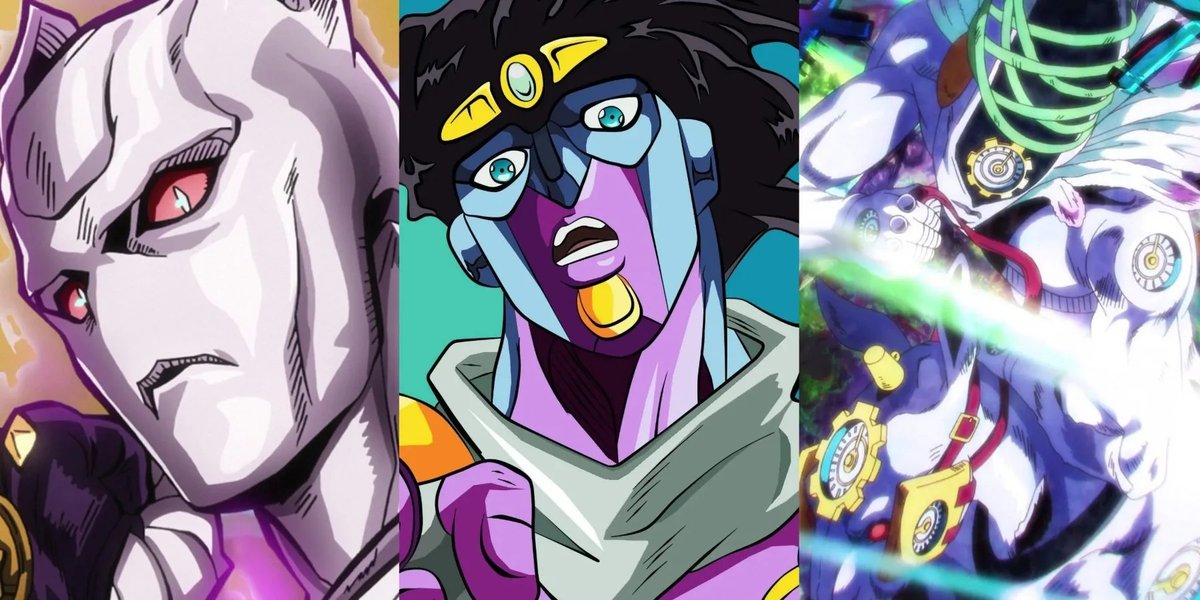
If you've ever delved into the eccentric, electrifying world of JoJo's Bizarre Adventure, you've undoubtedly encountered one of its most iconic and enduring concepts: the Stand. More than just a quirky superpower, Stands are the very fabric of the series' combat, character development, and narrative innovation. Understanding the intricate JoJo's Bizarre Adventure Stand Lore & Naming History isn't just about knowing who can punch harder; it's about grasping the psychic projections of ambition, fear, and destiny that define its heroes and villains.
These psychic manifestations have evolved dramatically across the saga, from their raw, elemental beginnings to their complex, reality-bending powers. Their very names, too, tell a fascinating story, shifting from ancient mysticisms to a deep, resonant reverence for music and culture.
At a Glance: What You Need to Know About Stands
- Psychic Manifestations: Stands are visual projections of a user's life energy or soul.
- Invisible to Most: Only other Stand Users (or those who've seen one exposed) can typically perceive them.
- Damage Reflection: Injury to a Stand usually translates directly to its user, and vice versa, with a few exceptions.
- Diverse Forms: They fall into five categories: Natural Humanoid, Artificial Humanoid, Natural Non-Humanoid, Artificial Non-Humanoid, and Phenomenon.
- Statistical Breakdown: Their capabilities are measured by six parameters: Destructive Power, Speed, Range, Persistence, Precision, and Development Potential.
- Evolving Naming Conventions: Early Stands referenced Tarot cards and Egyptian gods; later ones took inspiration from rock bands, album titles, and fashion.
- Integral to the User: A Stand's nature and abilities are intrinsically linked to its user's psyche, willpower, and even genetic lineage.
What Exactly Is a Stand? Unpacking the Psychic Phenomenon
At its core, a Stand is a tangible, psychically generated manifestation of a user's life energy or soul. Think of it as your fighting spirit, made real and given incredible powers. These entities typically appear as spectral figures hovering near their users, acting as extensions of their will and granting them superhuman abilities, whether for noble defense or nefarious schemes.
The link between user and Stand is profound. They are born from an individual's psyche – a powerful spiritual force and determination are usually prerequisites. While often human, even animals like Iggy (with his Stand, The Fool) can develop them. This connection also means a shared fate: unless a Stand is automatic (acting independently) or bound to an object, any damage inflicted upon the Stand is reflected as an equivalent injury on the user, and vice-versa. Destroy the Stand, and the user often perishes. However, some exceptional Stands, like Notorious B.I.G, can bizarrely survive even their user's demise.
You see, Stands are generally invisible to anyone without Stand-wielding capabilities. This creates a fascinating dynamic where battles often unfold unseen by ordinary people, adding a layer of hidden depth to the world. Exceptions exist, of course: some Stands are bound to physical objects (like Strength, integrated into a shipwreck) or their user might actively choose to make them visible (as Anubis once did to communicate its true form). Furthermore, a Stand User can access their Stand's senses, effectively seeing, hearing, or feeling through their spectral companion.
The Diverse Forms of Power: Stand Typologies
One of the most captivating aspects of Stand lore is their incredible variety. They don't just come in one shape or size; they manifest in ways that are as unique and bizarre as their users' personalities. Over time, recurring design elements have allowed us to categorize them into five general trends. Keep in mind, though, that many Stands might borrow elements from multiple categories, adding to their inherent strangeness.
- Natural Humanoid: These are Stands that closely resemble humans, complete with discernible muscular systems, eyes, and mouths. They often feel like physical extensions of their users.
- Examples: Star Platinum, Crazy Diamond, Gold Experience.
- Artificial Humanoid: While still humanoid in form, these Stands incorporate artificial or mechanical nuances. Their facial features might be non-humanoid, or they could feature mechanical joints, making them look more like robots, cyborgs, or androids.
- Examples: Hierophant Green, Silver Chariot, The World.
- Natural Non-Humanoid: Breaking away from human forms, these Stands resemble other lifeforms (animals, plants) or natural phenomena (like fog). They often possess a monstrous or primal aesthetic.
- Examples: Hermit Purple (vines), Tower of Gray (stag beetle), Justice (fog).
- Artificial Non-Humanoid: These Stands manifest as objects, often instruments, mechanical devices, vehicles, weapons, or tools. Their abilities are usually tied to their object-like nature.
- Examples: Strength (ship), Emperor (gun), Wheel of Fortune (car), Aerosmith (plane).
- Phenomenon: The most abstract category, these Stands either lack a clear, singular appearance or are integrated directly into the user's body or environment. Their presence is often defined by the effect they create rather than a distinct physical form.
- Examples: Tohth (comic book), Khnum (body alteration), Love Deluxe (hair control), Achtung Baby (invisibility).
This rich spectrum of visual forms ensures that every Stand encounter is visually distinct and brimming with creative potential, making each new battle an exciting reveal.
Beyond Strength: Deconstructing Stand Parameters
Just as diverse as their appearances are their capabilities. To help categorize and understand these powers, Stands are typically measured by "Stand Parameters" or "Stand Statistics." These six attributes provide a snapshot of a Stand's overall prowess and potential, often displayed as letter grades. What's truly fascinating is that all Stands possess "Development Potential," meaning they can grow stronger and uncover new abilities through experience and battle.
Here’s a breakdown of each parameter:
- Destructive Power: This measures a Stand's raw strength and its capacity to cause physical injury or environmental damage per unit of time. Close-range Stands, like Star Platinum, typically boast high destructive power (Rank C or higher).
- Speed: This refers to the Stand's agility, reflexes, and the rate at which it can perform actions. Again, close-range Stands often excel here. It can also describe the speed at which an ability takes effect, such as Whitesnake's 'Melt your heart' power.
- Range: This parameter combines the Stand's manifestation distance from its user, the area its ability can influence, and its spatial mobility. Interestingly, Range is often inversely proportional to Destructive Power; a Stand with immense punching power usually has a limited reach. However, exceptions like Red Hot Chili Pepper, which can travel through electrical grids, defy this rule. Sometimes, a Stand's range can even decrease as it evolves, as seen with Echoes.
- Persistence: This indicates the duration a Stand can actively maintain its ability or the cooldown period before a special ability can be reactivated. For example, Star Platinum: The World's time stop has a persistence limit.
- Precision: This measures the accuracy of a Stand's attacks and the exactness of its influence or effect on specified targets. Automatic Stands, which operate largely independently, generally rank lower here (D or under) because their targeting isn't directly controlled by the user.
- Development Potential: This is perhaps the most intriguing parameter. It quantifies a Stand's capacity to grow, develop new functions, refine existing abilities, and improve its overall capabilities. As a user masters their Stand, this potential often decreases (e.g., Star Platinum's Development Potential dropped from A to C). An E-Ranking suggests all abilities have been discovered, or very few exist. Conversely, Stands with abilities that can infinitely increase in scope or power, like Green Day or Notorious B.I.G, rank very high.
These parameters are rated with a simple letter-grade system:
- A: Excellent (Highest, superior)
- B: Good (Above standard, decent)
- C: Comparable to a Human (Average)
- D: Weak (Below average)
- E: Very Weak (Far below average)
- None: Impossible to compare (often for abstract or non-combat Stands).
Understanding these statistics helps decipher a Stand's strengths and weaknesses, offering a strategic layer to every bizarre battle.
Who Wields Such Power? The Stand User's Connection
The Stand is merely one half of the equation; the user is the other, and their bond is symbiotic. Developing a Stand isn't a random occurrence; it's generally tied to an individual's strong spiritual power, unwavering determination, or a significant life event. While most users are human, the existence of animal Stand users like Iggy proves that this powerful connection isn't exclusive to our species.
Stands can be awakened in a few key ways:
- Heredity: In the Joestar family, Stands are often inherited, passed down through bloodlines. This creates a fascinating genetic link to psychic power.
- The Bow and Arrow: This mystical artifact can artificially awaken Stands in individuals by piercing them. Those strong enough survive and gain a Stand; those who aren't perish. This method accounts for many antagonists throughout the series.
- Natural Awakening: Some individuals awaken their Stands purely through innate spiritual strength or a moment of intense emotional or physical stress. Tonio Trussardi's Pearl Jam, for instance, awakened from his sheer culinary zeal, not the Arrow.
The relationship between user and Stand carries significant implications: - Shared Vitality: As mentioned, damage is usually reflected. This means a user must protect their Stand as if it were their own body, making combat incredibly high-stakes. The destruction of a Stand almost always leads to the user's death, though automatic Stands or those bound to objects can sometimes be exceptions.
- Mental Prowess: A Stand's capabilities are deeply tied to the user's mental abilities and psyche. A strong will can push a Stand to its limits, while a wavering mind might not be able to fully utilize its power.
- Evolution of Abilities: Across the parts of JoJo's Bizarre Adventure, we see a fascinating evolution in Stand abilities. Earlier Stands (Parts 3-4) often had more humanoid forms and elemental powers (like fire or electricity). As the series progressed (Parts 5-6), Stands became increasingly mechanical in appearance and gained more intricate, often abstract, physical or reality-bending abilities (such as gravity control or temporal manipulation).
- Uncontrolled Powers: Not all Stands are perfectly controllable. Some, like Super Fly, might restrict their wielder or even be automatic, acting on their own (like Black Sabbath), requiring the user to adapt to its unique nature.
From Tarot to Rock: The Fascinating Evolution of Stand Naming
Perhaps one of the most delightful and iconic aspects of JoJo's Bizarre Adventure Stand Lore & Naming History is the sheer creativity behind their names. The inspiration for these monikers has undergone a dramatic and highly characteristic shift throughout the series, reflecting Araki's own evolving interests and influences.
Part 3: The Arcane and the Ancient
In Stardust Crusaders, the naming convention was heavily steeped in mysticism and mythology. Stands were predominantly named after:
- Major Arcana Tarot Cards: This lent an air of destiny and esoteric power to the Stands.
- Examples: Star Platinum, Magician's Red, Hierophant Green, Silver Chariot, The World (representing Jotaro, Avdol, Kakyoin, Polnareff, and Dio respectively). Other examples include Empress, Wheel of Fortune, Lovers, Death 13, Judgment, The Fool.
- Egyptian Gods: As the journey progressed to Egypt, the antagonists' Stands fittingly took names from the ancient Egyptian pantheon.
- Examples: Geb, Thoth, Khnum, Bast, Sethan, Anubis, Osiris, Horus, Atum.
This era of naming gave Stardust Crusaders a strong, overarching theme of fate and epic confrontation, with each Stand's name hinting at its nature or the user's personality.
Part 4 Onwards: A Symphony of Sound and Style
Starting with Diamond Is Unbreakable (Part 4) and continuing through the subsequent parts, the naming convention made a dramatic pivot towards popular culture, primarily:
- Distinguished Rock Bands and Musicians: This became the dominant and most beloved naming style. Araki's profound love for music, particularly progressive and classic rock, shines through.
- Examples:
- Crazy Diamond (Pink Floyd's "Shine On You Crazy Diamond")
- The Hand (The Band)
- Red Hot Chili Pepper (Red Hot Chili Peppers)
- Echoes (Pink Floyd album/song)
- Killer Queen, Sheer Heart Attack, Another One Bites the Dust (all Queen songs, belonging to Yoshikage Kira's Stand)
- Boy II Man (Boyz II Men)
- Highway Star (Deep Purple)
- Pearl Jam (Pearl Jam)
- Cinderella (referencing the band)
- Atom Heart Father (Pink Floyd's "Atom Heart Mother")
- Earth Wind, and Fire (Earth, Wind & Fire)
- Album Titles & Songs: Beyond just band names, specific album or song titles became direct Stand names.
- Fashion Labels and Brands: While less common than music, some later Stands draw inspiration from the fashion world, further cementing the series' unique blend of high culture and street style.
This shift in naming wasn't just aesthetic; it embedded JoJo's Bizarre Adventure even more deeply into the cultural zeitgeist, making the Stands feel both incredibly powerful and curiously familiar. It's a meta-commentary on how pop culture itself becomes a powerful, almost spiritual, force in modern life. The sheer creativity in finding appropriate names from such a vast musical library is astounding, making for an enjoyable experience whenever a new Stand is introduced. If you're ever curious about crafting your own Stand, a Stand name generator can offer a fun way to explore these naming conventions!
A Deep Dive into Notable Stands (Part 3 & 4 Highlights)
Let's illustrate some of these concepts with a closer look at a selection of Stands from Stardust Crusaders (Part 3) and Diamond Is Unbreakable (Part 4), showcasing their diverse lore and abilities.
From Part 3: Stardust Crusaders
- Star Platinum (Jotaro Kujo): The quintessential Natural Humanoid Stand. Silver-skinned, incredibly muscular, Star Platinum embodies raw physical power. It boasts superhuman senses, strength, stamina, accuracy, and terrifying speed. Its most iconic ability, discovered later, is "The World," allowing it to stop time for up to 5 seconds at its peak. Its range is a narrow 2-3 meters, making Jotaro a close-quarters combat specialist. Its Development Potential decreases over time as Jotaro masters its abilities.
- Magician's Red (Mohammed Abdul): Another Natural Humanoid, but with an eagle-headed design. Magician's Red generates and manipulates intense flames, capable of melting steel. It can be controlled remotely and possesses a "heat radar" to detect opponents, showcasing an elemental power that was common in early Stands.
- Hierophant Green (Noriaki Kakyoin): An Artificial Humanoid, this Stand is a green, coil-like mass that can stretch to impressive distances and even become microscopic. Its ability, "Emerald Splash," shoots hardened emeralds at high speeds. It also possesses the unique ability to "possess" people by entering their bodies. Its extreme range makes it a stark contrast to Star Platinum.
- Strength (Forever): A fantastic example of an Artificial Non-Humanoid, bound Stand. Strength isn't a humanoid figure; it's tangible and binds to a shipwreck, transforming it into a colossal freighter, "Big Daddy." The user, an orangutan named Forever, controls all parts of the ship, demonstrating how a Stand can integrate with and weaponize its environment.
- Justice (Enya Geil): This Phenomenon Stand is a massive fog with a skull core. It threads mist through any open wound, allowing Enya to control victims like marionettes and turn them into zombie minions. It's a terrifying example of a Stand that lacks a conventional physical form but wields immense power, dissipating only if Enya herself is defeated.
- Anubis (Caravan Serai, Chaka, Khan, Polnareff): A unique case, Anubis is a Stand with no single wielder, imbued into a sword. It learns from every encounter, never falling for the same attack twice. It's intangible to all but its opponent and can phase through objects. Anubis even reveals its true, Egyptian god-like form to communicate, making it a truly bizarre and memorable foe.
- The World (Dio Brando): Dio's Stand is strikingly similar to Star Platinum in appearance – an Artificial Humanoid. The World surpasses Star Platinum in phenomenal strength, senses, stamina, speed, and accuracy. Its most devastating ability is an even longer time stop, which Dio mastered to an incredible degree. It could also project images onto photographs, a more subtle, Hermit Purple-like ability.
From Part 4: Diamond Is Unbreakable
- Crazy Diamond (Josuke Higashikata): A Natural Humanoid Stand and a melee specialist with a short range (3m). Its defining ability is "Restoration": it can repair damaged objects, heal injuries (though not its user's or resurrect the dead), and even restore items to their raw materials. Josuke can use this to trap enemies or track objects. However, when Josuke gets angry, Crazy Diamond "malfunctions," improperly reassembling things in bizarre ways.
- The Hand (Okuyasu Nijimura): An Armored Humanoid Stand. Its right hand possesses the terrifying ability to erase space from existence, pulling the remaining spaces together. This can be used to pull objects or people closer or to simply make things vanish. The destination of erased objects remains unknown, adding a layer of mystery to its destructive power.
- Echoes (Koichi Hirose): A remarkable example of a Stand with evolutionary forms, Echoes has three distinct "Acts," each growing more powerful and humanoid.
- Act 1: A flying, turtle-like Stand that writes sound effects (kana) on surfaces, making them emit sounds of increasing volume.
- Act 2: More humanoid, its tail creates sound effect writings that invoke the associated quality (e.g., "whoosh" creates wind).
- Act 3: Fully humanoid and short-range (2m), Act 3 is extremely fast. Its ability "Freezes" objects by rapid punching, making them incredibly heavy.
- Red Hot Chili Pepper (Akira Otoishi): A rust-colored metal humanoid with an electricity nimbus when charged, this Artificial Humanoid Stand manipulates any electricity it touches. It can travel through electrical wires, increasing its speed and strength as it draws more power. It also notably dissolves in water, highlighting a unique weakness. Its ability to range across a city's power grid while maintaining power makes it an exception to the usual range/power inverse relationship.
- Killer Queen (Yoshikage Kira): A chilling Natural Humanoid Stand with a cat-like head, Killer Queen's abilities revolve entirely around explosions, making Kira one of the most dangerous villains.
- Primary Bombs: Killer Queen can booby trap any object (doorknobs, coins, bodies), causing an internal explosion when touched or at Kira's will.
- Sheer Heart Attack: An autonomous bomb located in Killer Queen's left hand. This tank-treaded ball has unlimited range, seeks out the hottest thing, and detonates. Its impervious plates make it incredibly difficult to destroy, though Crazy Diamond can "repair" it back to Killer Queen.
- Another One Bites the Dust: Kira's tertiary bomb, a miniaturized Killer Queen, stays with anyone who learns Kira's secrets. Any interrogation triggers an explosion via the victim's eye, and then induces a temporal loop, rewinding time by an hour until Kira can identify and eliminate the threat.
These Stands, and countless others, showcase the boundless imagination and intricate systems that define JoJo's Bizarre Adventure Stand lore. Each Stand is not just a power, but a reflection of its user, a puzzle to be solved, and a force to be reckoned with.
Mastering the Bizarre: Common Questions & Misconceptions
The world of Stands can be complex, leading to many questions. Let's clarify some common points:
Q: Can non-Stand users see Stands?
A: Generally, no. Stands are psychic manifestations invisible to ordinary people. However, there are specific exceptions: if a Stand is bound to a physical object (like Strength transforming a ship), if a user intentionally exposes it (like Anubis), or in rare cases of shared perception.
Q: Can a Stand exist without a user?
A: Almost never, but there are legendary exceptions. Anubis, the sword-bound Stand, is one such anomaly, existing independently of a single wielder. Notorious B.I.G. is another, continuing its rampage even after its user's death, acting purely on instinct. However, these are extremely rare and atypical.
Q: Are Stands limited to humans?
A: No! While most users are human, the series clearly shows that other living creatures, particularly those with strong spiritual fortitude, can develop Stands. Iggy, the dog, with his sand-manipulating Stand The Fool, is the prime example.
Q: Why do Stands look so different? Some are humanoid, others are objects or even fog?
A: A Stand is a visual manifestation of its user's psyche and soul. Just as human personalities and inner worlds are infinitely varied, so too are their Stands. The five typologies (Natural/Artificial Humanoid, Natural/Artificial Non-Humanoid, Phenomenon) help categorize these differences, but ultimately, the unique appearance and ability are a direct, often symbolic, extension of the user themselves.
Your Journey into the Bizarre Continues
From their origins as spiritual energy to their varied forms and shifting naming conventions, Stands are more than just a superpower system; they are a narrative engine. They embody the user's essence, drive the plot forward, and provide an endless source of unique combat scenarios and character development. The rich tapestry of JoJo's Bizarre Adventure Stand Lore & Naming History is a testament to the series' enduring creativity and its ability to constantly reinvent itself while staying true to its bizarre roots.
So, the next time you encounter a Stand, take a moment to appreciate not just its destructive power, but the subtle layers of its existence: its unique appearance, its statistical profile, its profound connection to its user, and the cultural inspiration behind its name. It's a journey into the soul, often with a rock 'n' roll soundtrack.